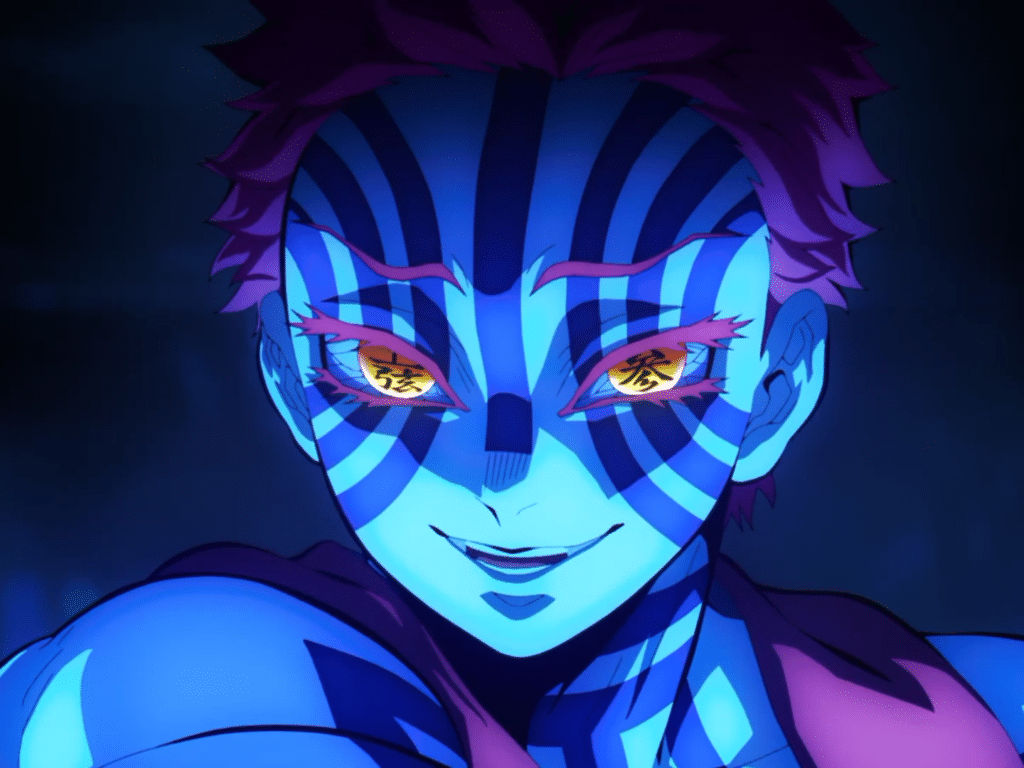

Bleach: The Calamity expands the manga’s story to prepare for its conclusion.
It’s no secret to Bleach fans how involved mangaka Tite Kubo was in the Thousand-Year Blood War anime. Bleach: The Calamity is all the richer for his involvement. The mangaka explains his extensive involvement in the theatrical release of The Calamity’s first three episodes, which ranges from creating reference art and storyboards to supervising character designs. The anime features far more original scenes with new character interactions and lore. The biggest upgrade, naturally, is the fights. These feature many new powers and forms for characters, as well as entirely original fight sequences.
According to CBR, Kubo was in poor health during the final chapters of the manga. This was largely why Bleach ended abruptly, at least to many readers. This adaptation gives Kubo an opportunity to tell the story as he might have had his health been in better condition. The biggest differences in the current eight episodes of The Calamity arc, which cover manga chapters 661–683 and were arguably the most affected by the manga’s abrupt ending, are outlined below.
Be advised, spoilers for the first eight episodes of The Calamity lie ahead. Manga-exclusive details do not include future spoilers.
The show’s additional details and cameos
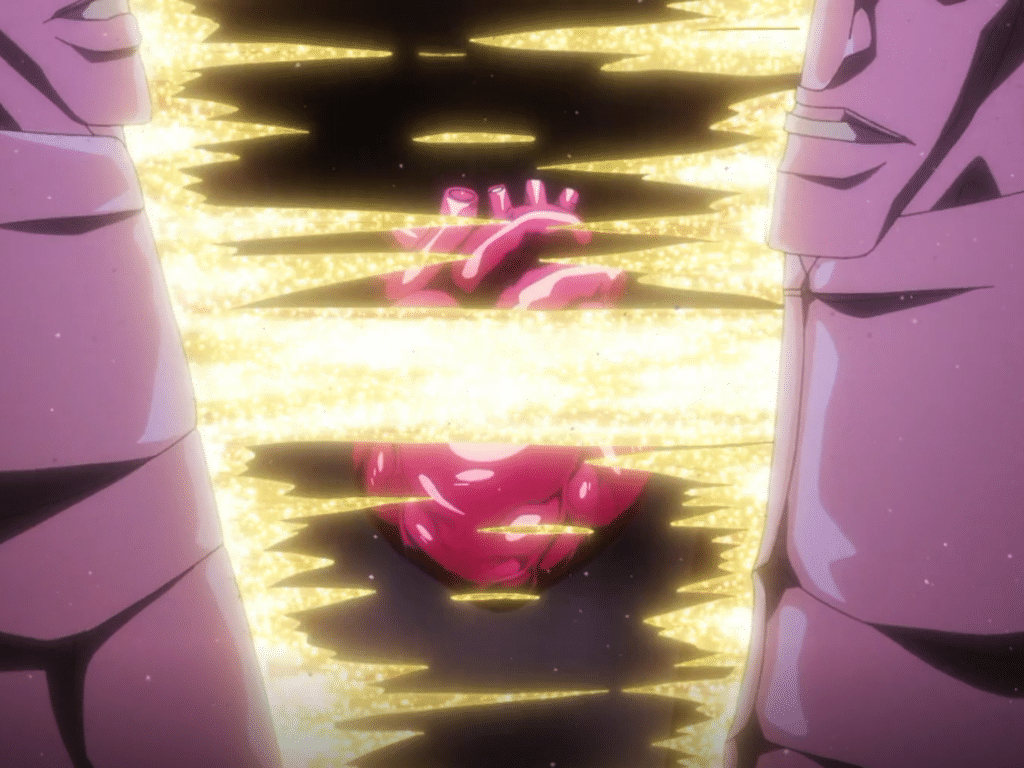
One of the smaller additions in Bleach: The Calamity is its numerous visual details. In the theatrical release’s post-credits interview, Kubo specifically cited the horror-inspired, doll-like Bankai design of Kisuke Urahara (Shinichiro Miki) as an example. He added new details about the Zanpakuto’s power that only animation could fully depict. Another example is the confirmation that Gerard Valkyrie (Tsuyoshi Koyama) is the Soul King’s heart. Evidence of this is shown when a heart regenerates around Gerard’s Schrift after he is split in two. The final visual detail is Lille Barro being absorbed into the second Auswahlen. The manga only implied his death through Yhwach’s dialogue.
Another small change is the inclusion of older characters in additional scenes. Two Captains with little screen time or significance beyond their focused battles in previous parts are the transformed Sajin Komamura (Tetsu Inada) and Soi Fon (Hoko Kuwashima). Lieutenants Momo Hinamori (Kumi Sakuma), Rangiku Matsumoto (Kaya Matsutani), and Tetsuzaemon Iba (Rintaro Nishi) watch the battles from afar, as do seated officers Ikkaku Madarame (Nobuyuki Hiyama) and Yumichika Ayasegawa (Jun Fukuyama). Even unseated, low-ranking Soul Reapers such as Ryunosuke Yuki (Daiki Yamashita) and Shino Madarame (Asami Seto) receive additional scenes.
These cameos don’t change the outcome, but they make the final battle feel like it involves the whole Bleach universe.
The consequences of the Soul King’s death and Yhwach’s defeat
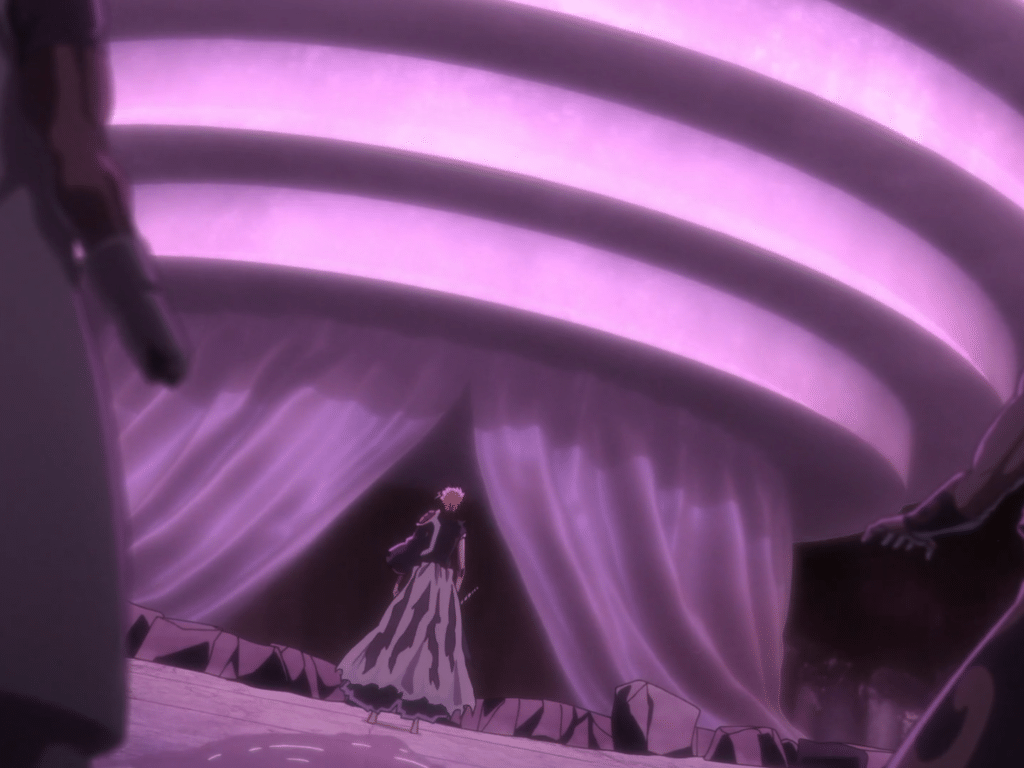
Though sealed away and unable to act, the Soul King is the lynchpin holding the Three Worlds together. In killing him, Yhwach (Takayuki Sugo) took not only his power but his position as that lynchpin. Killing the Quincy King, then, would be killing the world. Sternritter Grandmaster Jugram Haschwalth (Yuichiro Umehara) points this out to Uryu Ishida (Noriaki Sugiyama). However, it fails to deter the young Quincy.
The previous parts also established a darker side to the otherwise cheerful Royal Guardsman Ichibe Hyosube. He observed Ichigo Kurosaki (Masakazu Morita) closely during his training. The Calamity reveals Ichibe’s plan to mutilate and seal away Ichigo as the next Soul King. During their fights, Ichigo and Uryu learn about the plan. Still, the heroes press onward to defeat the Quincy King.
These implications add another layer to the final battle. The Soul Reapers must not only defeat Yhwach but also find a way to maintain the Three Worlds. Ichigo becoming the Soul King is one solution, but the others will likely try to find another way.
Uryu’s fight with Haschwalth
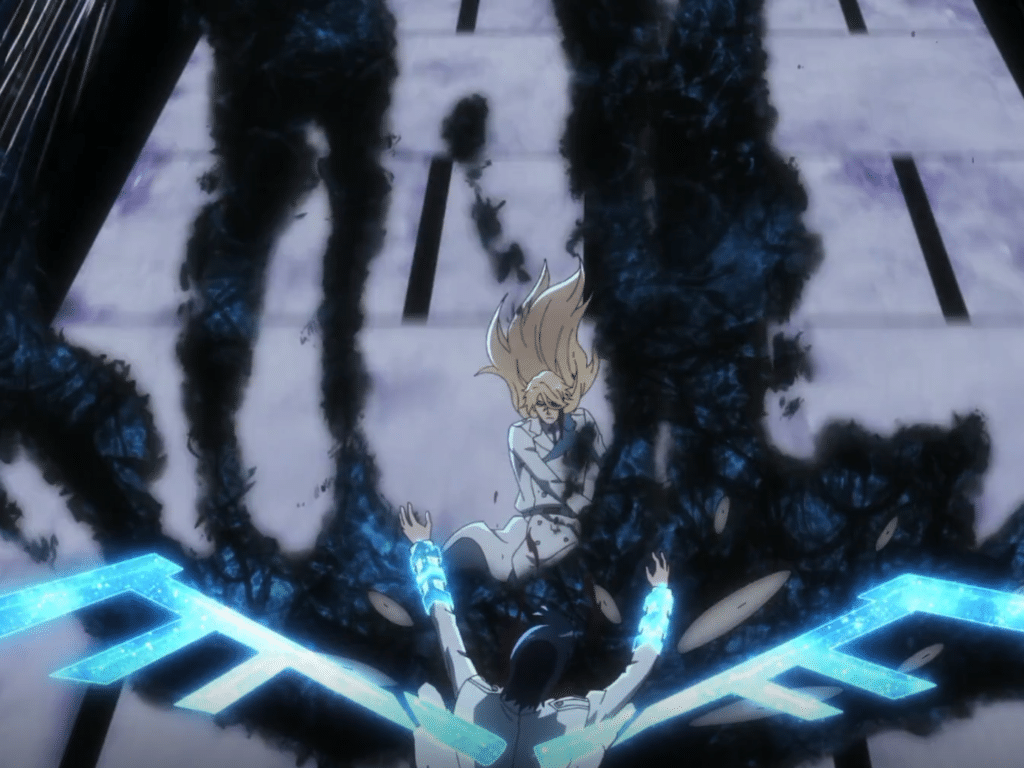
One of the biggest expanded fights across The Calamity is between the self-proclaimed Last Quincy and Yhwach’s right-hand man. In the manga, the battle largely occurred offscreen. Bleach: The Calamity instead fully shows it in each episode, featuring both Quincies in anime-only forms. While Uryu’s Vollstandig appeared in previous parts, Haschwalth uses the Almighty for the first time in the anime.
Haschwalth’s character also gains more depth in additional scenes. In the post-credits interview, Kubo describes his new form (dubbed “hAschwAlth”) as the manifestation of his dark, heavy feelings, a contrast with the cool, calm demeanor others see. His new lines show his boundless anger toward Uryu and the idea of being replaced by him at the Quincy King’s side. Uryu’s intelligence also shines as he stays on the defensive until he learns his enemy’s limits using the Almighty. The Last Quincy also uses various gadgets seen only once before in the manga.
Lastly, the fight ends at a slightly different time. In the manga, Yhwach’s second Auswahlen, which fatally absorbed Haschwalth and Gerard, happened at the same moment as the fight. In the anime, the Quincies’ fight ends first, when Yhwach uses the Sternritter Grandmaster’s power to shatter Tensa Zangetsu. The Auswahlen then absorbs Gerard, Lille’s clones, and Mimihagi.
Ichigo’s fight against the Quincy King
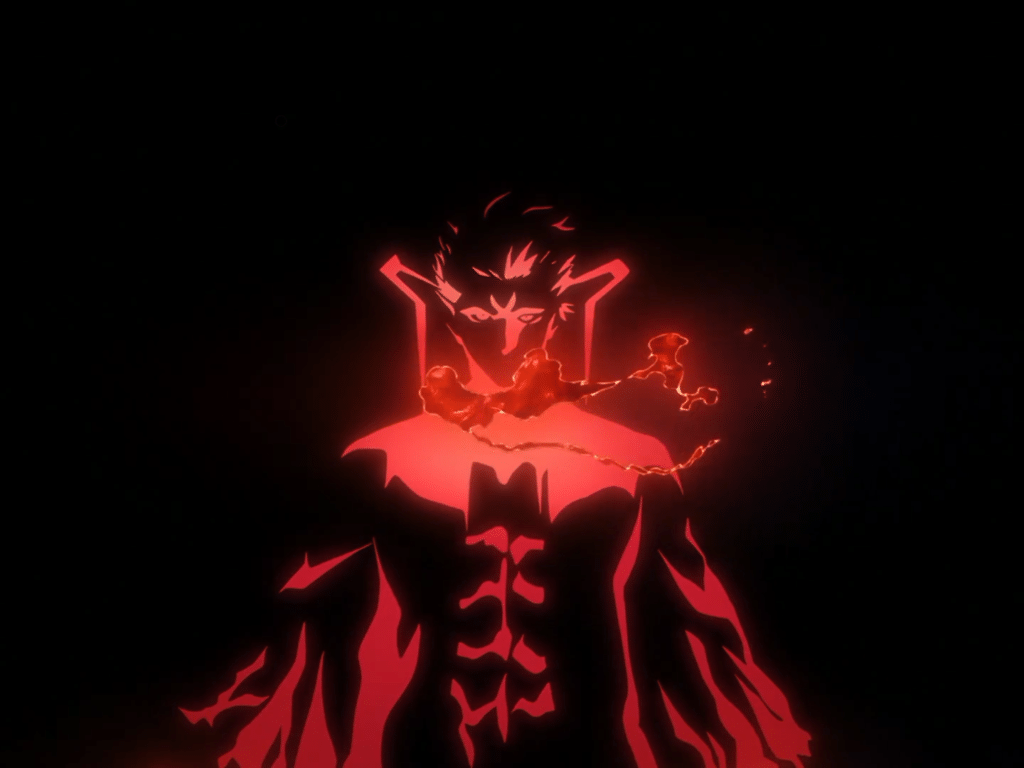
The battle in the throne room lasted a few chapters. It unfolds purely between Ichigo, Orihime Inoue (Yuki Matsuoka), and Yhwach. The Almighty’s use, too, is relatively small in scale. Comparatively, the actions and emotional stakes in the Bleach: The Calamity are far grander.
The clashes are much bigger and extremely visually impressive, making each combatant all the stronger for dealing them or enduring them. Rukia Kuchiki (Fumiko Orikasa) also appears, wielding her Bankai again. Ichigo even gains a new form called ‘Blood Chains Ichigo,’ representing his Soul Reaper/Hollow powers, and a new ability to create shadowy clones. This makes Yhwach’s ability to endure these various powers, as well as the Almighty’s ability to alter what should have been several back-to-back finishing blows, all the more terrifying.
Throughout the battle in between clashes, Ichigo and Yhwach talk about many things. These range from the risks of killing the lynchpin of the Three Worlds and Ichibe’s plan. Their most important dialogue is the purpose of power. The Quincy King repeatedly states the use of power to dominate, and mocks his enemies’ use to protect. This turns the fight into a battle of ideals.
The anime more effectively highlights despair as a prevalent theme. Dialogue alone portrayed this theme in the manga, but the larger scale of the fight helps push this. Yhwach endures attack after attack, only becoming stronger with time. In turn, it makes each hero’s resolve to stand against him without giving up more impressive.
This culminates in revealing the Almighty’s true power, accompanied by the Quincy King destroying Ichigo’s Bankai and gravely wounding his friends. It makes the Soul Reaper’s fall to despair extremely powerful.
The culmination of Orihime Inoue’s character arc
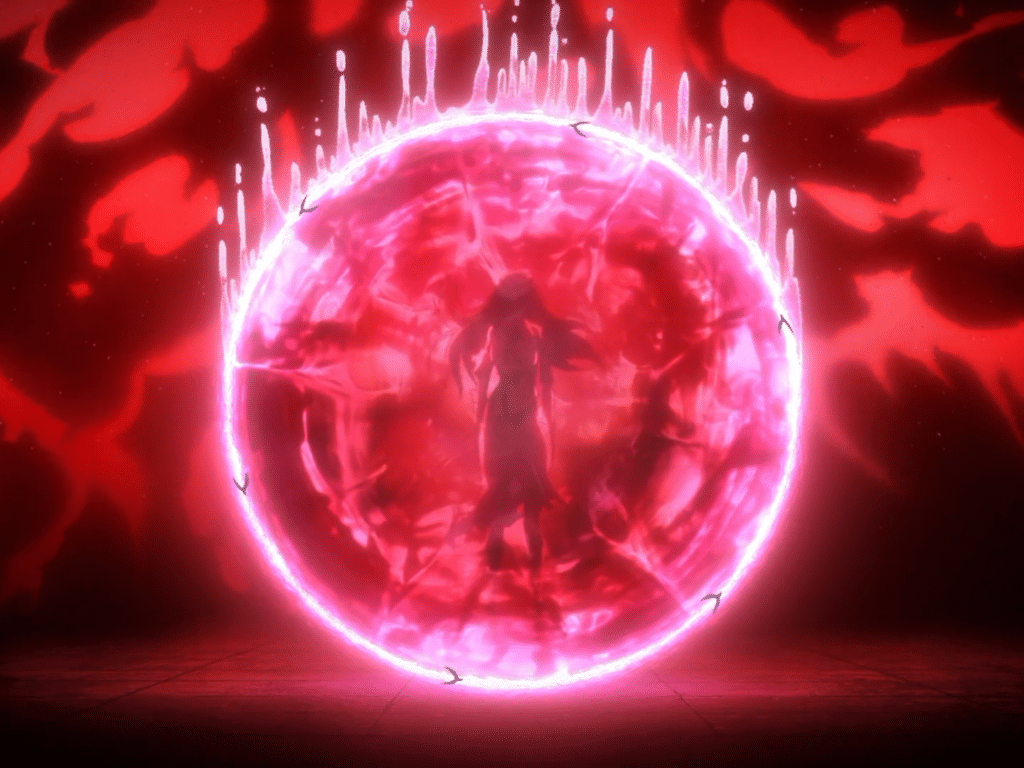
By far, the most emotionally profound change to the fight against Yhwach centers on Orihime. In the manga, she was more of a spectator, healing and shielding only three times. In the episode “Defend You,” Orihime shows not only that hers is a power to surpass God, as Sosuke Aizen once described, but that her resolve is truly invincible.
In battle, Orihime heals Ichigo and herself from several attacks. She manages to stand against Yhwach’s power. However, the Quincy King mocks her for doing nothing more, claiming that she is a liability to Ichigo in the fight and that he only brought her around out of pity. This not only feeds into the fight’s ideals of despair and using power to protect, but into her own character arc.
Orihime’s story is defined by her inner strength. She suffered parental abuse and bullying at school in her backstory. Throughout the series, she faced her own powerlessness repeatedly. Her frustration in the battle culminates in a new, potent technique called Rokuten Shishun. In her words, the technique expands her power to reject all the suffering in the world, which in her eyes stems from the Quincy King. It would have erased Yhwach if not for the Almighty.
The fight against the Quincy King in Bleach: The Calamity, specifically “Defend You,” rightfully does justice to her character and her arc unfolding since the very beginning of the show.
The plan to collapse the Three Worlds
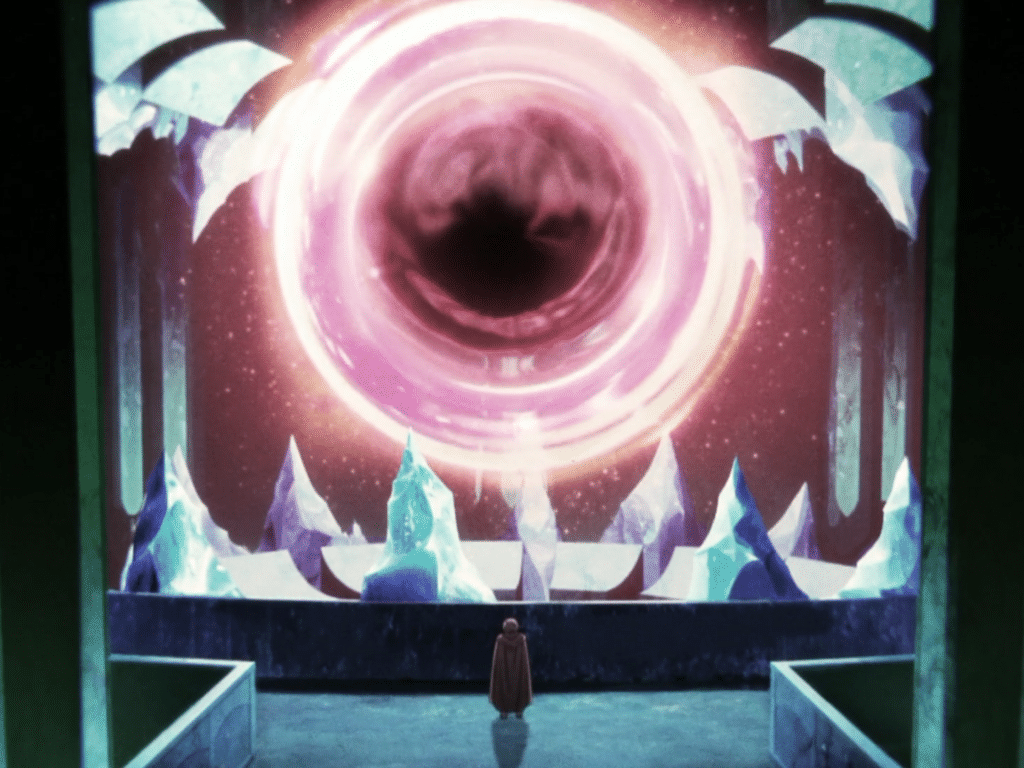
Yhwach names his envisioned paradise for all Quincies “Wahrwelt.” To create it, however, he must first collapse the Three Worlds (the Human World, the Soul Society, and Hueco Mundo) into one. He plans to use the Seed of Destruction, which is creating distortions in the Human World. Its developer is Soken Ishida (Akio Nojima), Uryu’s grandfather. His role expands from a throwaway mention as a Wandenreich exile to an instrumental part of the Quincy King’s plan.
The Soul Reaper Research and Development Institute is the main group through which the plan unfolds. Its members monitor the barrier separating the worlds and try to delay its collapse. The power of Mimihagi, the Soul King’s Right Arm, also maintains the barrier until Auswahlen consumes it. The subplot reaches the Human World too, which begins overflowing with Hollows as the Royal Palace appears in the sky. The episodes also include cameos by minor characters there, such as the employees of the Urahara Shop and Tatsuki Arisawa.
The series protagonists are centered in this plotline when Uryu plots to destroy the Seed, forming an alliance with the Soul Reapers and Arrancar. This culminates in a fight between the Quincy King, Uryu, and the Arrancars Tier Harribel (Megumi Ogata) and Nelliel Tu Odelschwanck (Tomeko Kaneda / Arisa Kiyoto). The plan succeeds, forcing Yhwach to manually collapse the borders.
In the latest episode, Yhwach appears in all Three Worlds. The episode ends setting up a battle with the Quincy King unfolding across all worlds at once, rather than just the Soul Society. This will feature many characters who have not appeared since their focused battles, such as Captain-Commander Shunsui Kyoraku. The Arrancar in particular will receive more spotlight, since Grimmjow and Nel had no appearances in the manga after fighting Askin Nakk Le Vaar, and Harribel hadn’t appeared at all since the Wandenreich conquered Hueco Mundo.
Overall, the changes improve Bleach’s story, giving Orihime, Uryu, and the Three Worlds plot the room the manga’s rushed ending never allowed. Few story beats remain, so the finale’s job is to answer the question the series has built toward: can power used to protect beat power used to dominate?
The final two episodes of Bleach: The Calamity will resume airing starting October 19.
Source: Bleach Vol. 72-74, Bleach: Thousand-Year Blood War – The Calamity (Movie), CBR