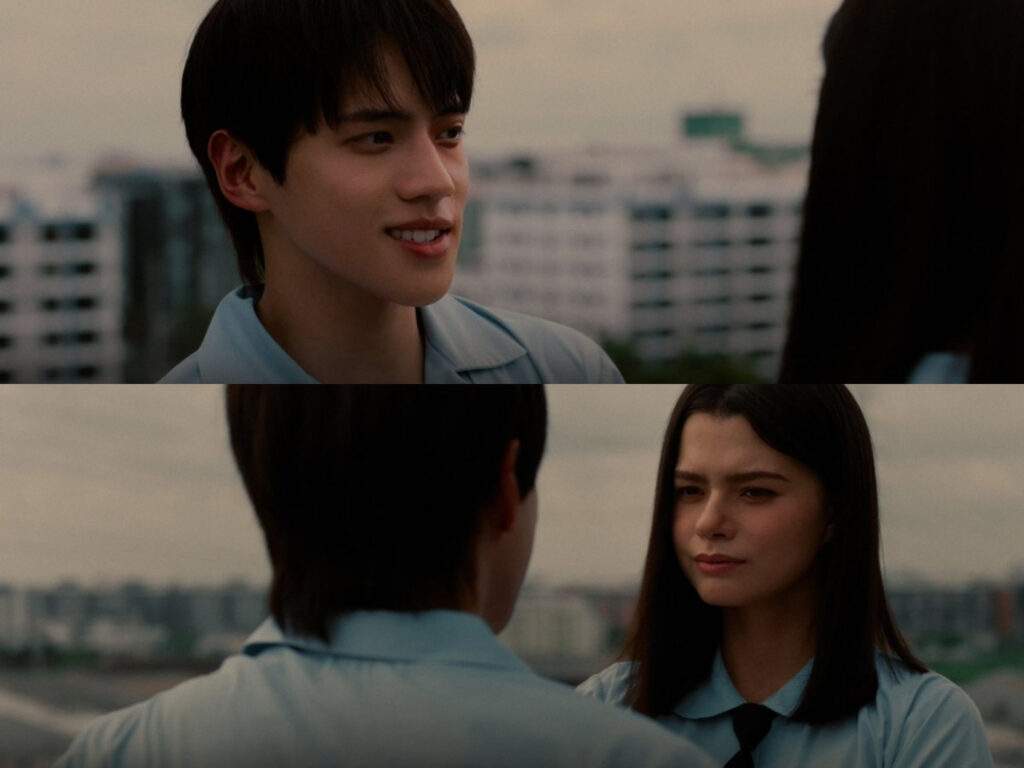
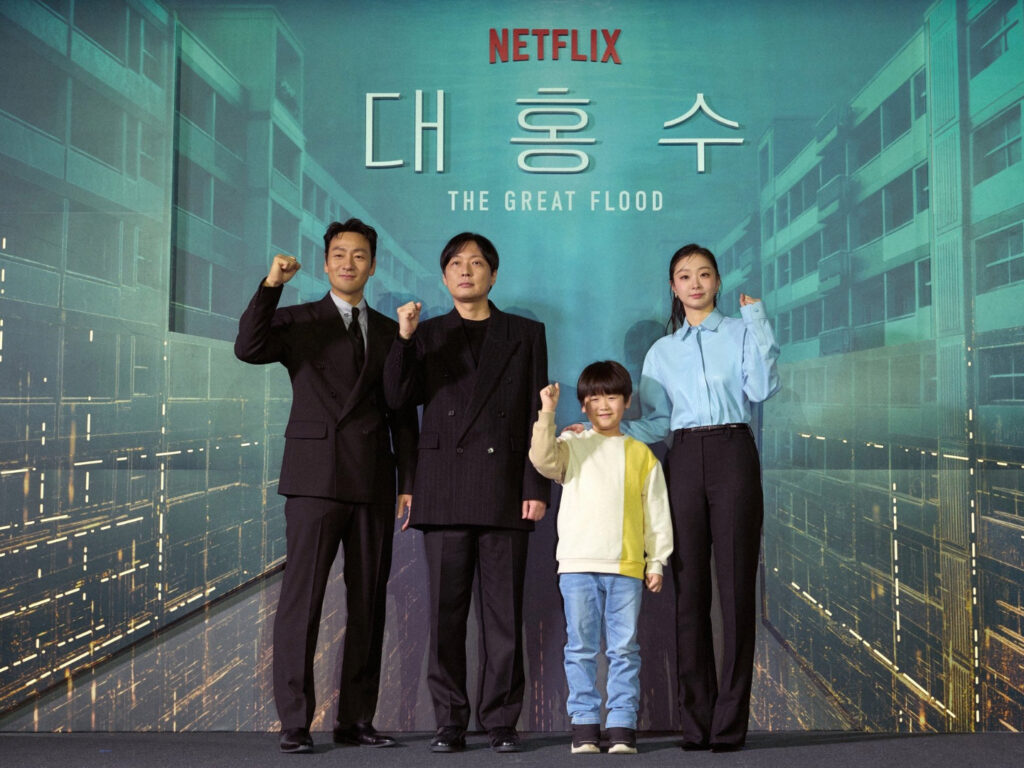
The Great Flood starring Kim Da-mi and Park Hae-soo delivered a complete plot on AI and how it affects humans through their stellar acting and well-realized character.
Netflix’s newest Korean sci-fi spectacle, The Great Flood, has quickly climbed to the top of the platform’s global non-English film rankings. However, despite its strong viewership, the film has sparked mixed reactions, largely due to its ambiguous finale and intellectually charged themes.
Directed by Kim Byung-woo and led by Kim Da-mi alongside Park Hae-soo, the 2025 disaster film goes beyond large-scale apocalyptic visuals. Instead, it weaves in deeper reflections on motherhood, memory, and artificial intelligence. Since its release on December 19, 2025, the movie has continued to fuel discussion, proving that its impact extends well past the chaos onscreen.
Also Read: Pop Corner: As You Stood By Ending Explained: Did Eun-su and Hui-su End Up in Prison?
Disclaimer: This article contains spoilers about the movie. Read at your own risk.
The Great Flood Plot
Kim Da-mi and Park Hae-soo headline this South Korean sci-fi apocalypse thriller, delivering performances that anchor the film’s high-stakes premise. In the story, Da-mi portrays An-na, a scientist stationed at the Isabela research facility, where she works to preserve humanity in the event of a global catastrophe.
As part of the lab’s experiments, researchers create two synthetic children, Ja-in and Yu-jin. An-na becomes Ja-in’s primary caregiver, effectively stepping into the role of her mother, while her colleague Hyeon-mo assumes responsibility for Yu-jin. However, everything changes when An-na learns that an asteroid impact in Antarctica has triggered rising sea levels worldwide, setting off a catastrophic flood that threatens to wipe out civilization.
Without hesitation, An-na shifts her focus to survival, determined to protect both herself and Ja-in. Soon after, the laboratory dispatches Son Hee-jo to escort them to safety. Complicating matters, only An-na and Hyeon-mo possess the expertise to complete the Emotion Engine, a critical component for the AI children’s development. With Hyeon-mo and Yu-jin unreachable, humanity’s future ultimately rests in An-na’s hands—and in Ja-in’s survival.
Does An-na Save Ja-in?
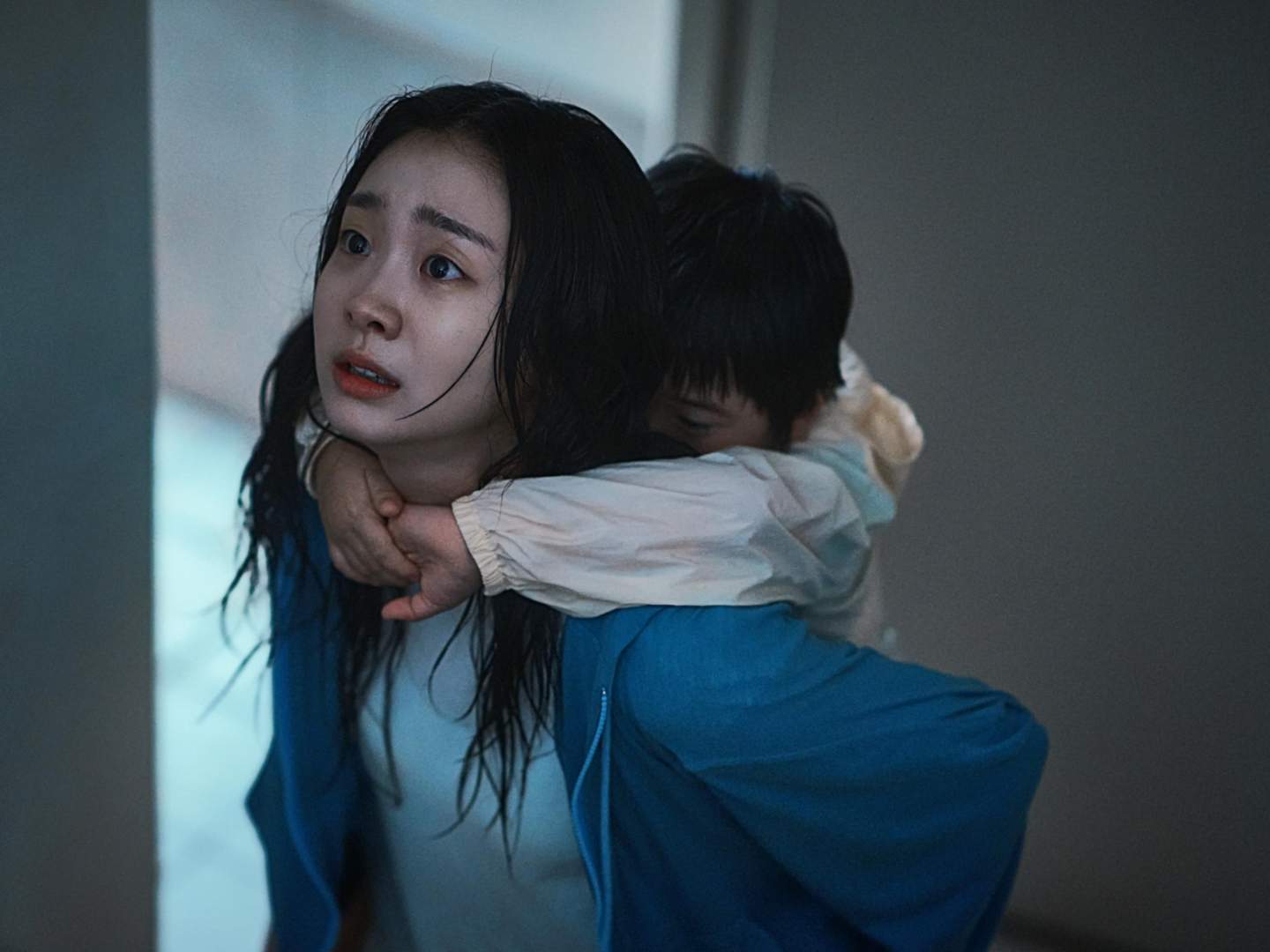
With Hee-jo guiding them, An-na and Ja-in attempt a perilous climb toward the rooftop as floodwaters swallow their apartment building floor by floor. Throughout the escape, An-na places her trust in Hee-jo, unaware that he is concealing crucial information. Soon, the truth comes to light: Hyeon-mo never died in the disaster. Instead, she fled with her child after realizing the laboratory would eventually reclaim the AI children, choosing escape over obedience.
By the time An-na connects the dots, the situation has already spiraled out of control. The building is nearly submerged, leaving Hee-jo’s route as their only chance out. A flashback then reveals the root of An-na’s emotional conflict—her husband died in a car accident after it plunged into a lake, forcing her to save Ja-in while leaving her husband behind. That trauma once drove her to consider giving Ja-in up, yet over time, she grew deeply attached and embraced him as her own son.

Suggested Read: Pop Corner: The Price of Confession Ending Explained: Who Killed Lee Ki-dae and Se-hun?
Is Sacrifice the Only Way Forward?
Meanwhile, Hee-jo misjudges An-na’s intentions, believing she would abandon Ja-in just as his own mother once did. Because of this belief, he delays revealing the laboratory’s plan to separate them. As they reach the top floor, An-na becomes overwhelmed by the thought of losing Ja-in, yet Hee-jo remains unmoved, insisting that personal loss is necessary to ensure humanity’s survival.
Once on the rooftop, they encounter a recovery team from the lab. Hee-jo hands Ja-in over, allowing the scientists to extract vital data from him. An-na fights back in desperation, but the guards restrain her. After the data collection ends, they permit her a brief goodbye. In a quiet act of resistance, An-na instructs Ja-in to hide in a nearby closet, promising she will return for him.
Events spiral quickly after that. The guards kill Hee-jo before he can board the helicopter and force An-na to leave with them. As the world collapses, the lab transfers her to a space facility to continue its experiments. During the journey, An-na reveals her true intent: she plans to create a mother modeled after her own experiences, designing a simulation where the subject endures relentless trials in search of her child. Determined to see it through, An-na volunteers herself as the first test subject for the Emotion Engine.

Does the Simulation Work?
Inside the simulation, An-na reconstructs the apocalyptic flood and repeatedly searches for Ja-in. At first, however, she cannot remember her final words to him, leaving her disoriented each time the test begins. As a result, every attempt ends the same way—she dies and wakes up once again on the morning the flood begins.
In many of these cycles, An-na loses Ja-in almost immediately as they try to reach the rooftop. Gradually, though, fragments of memory start to carry over between simulations. With each run, she becomes more aware of the pattern and eventually helps Hee-jo understand that he, too, exists within the simulation.

Although they begin working together, success remains out of reach. The simulation has no clear endpoint, trapping An-na in an endless loop of failure. Still, over time, clarity sets in. She remembers why she entered the simulation in the first place—and, more importantly, what she must do to finally bring it to an end.
You Might Also Like: Pop Corner: Dare You to Death Episode 1 Recap: Episode 2 Preview and Release Date
The Great Flood Ending Explained
In her final run through the simulation, An-na recalls that Ja-in loves to hide in closets. Using this knowledge, she and Hee-jo split up to search the flooded building floor by floor. Though the guards fatally shoot Hee-jo during the attempt, An-na presses on and eventually reaches the rooftop.
There, she discovers Ja-in safely tucked in a closet, and he reminds her of her promise to come back for him. Their reunion is emotional and heartfelt, but the guards immediately try to take Ja-in again. This time, An-na fights fiercely, creating an opening for Ja-in to escape into the rising floodwaters. She follows, swimming through the surging waters, and finally reaches her son.
An-na completes the Emotional Engine test by rescuing Ja-in, using the collected data to successfully create a human-like AI mother. Freed from the endless cycle of simulations, she and Ja-in leave the time loop behind. The film concludes with the two of them aboard a spaceship, returning safely to Earth.

The Great Flood Review
The Great Flood displays a dual-layered narrative, which can feel complex and even confusing on a first viewing. Personally, it took me two watches to notice the subtle details distinguishing each simulation—like the numbers on An-na’s t-shirts and other small clues.
In the first half of the film, we follow An-na in her human form, struggling to survive the catastrophic flood. In the second half, we see her as a post-apocalyptic AI, working tirelessly to complete the simulation by locating Ja-in and breaking free from the endless time loop.
Technically, Ja-in remains “alive” as an AI child, since the lab preserved his data, leaving open the possibility of creating multiple versions of him.
At its core, the film explores the philosophical tension between humanity and artificial intelligence. It asks whether the goal is truly to save humankind or merely to produce artificial versions of it.
Can technology ever replicate the full spectrum of human emotions—the essence of what makes us human? And can AI truly experience the depth and nuance of maternal love? These questions linger long after the credits roll, offering plenty of food for thought.
The Great Flood is currently available for streaming on Netflix.
You Might Also Like: Pop Corner: Mantis (2025) Ending Explained: Who Won Between Han-ul, Jae-yi, and Dok-go?
Source: Netflix, Netflix Korea